


The AIDO Framework: Structuring Your Brand for AI Discovery


AI visibility isn’t accidental.
It’s structural.
If AI systems are going to interpret, compare, and recommend your brand, your site needs to be built with that in mind.
That’s where AIDO comes in.
AI Discoverability Optimization isn’t a trend.
It’s a structural response to how AI systems retrieve and synthesize information.
If AI becomes a primary interface for product discovery, then brands need to be built for interpretation — not just ranking.
The AIDO framework is built around that shift.
1. Define the Entity
Your homepage must clearly define:
• What you are.
• What category you exist in.
• What problem you solve.
Not a slogan. A definition.
If AI cannot confidently describe your business in one sentence, you have a clarity issue.
2. Structure Use-Case Coverage
Features don’t create understanding.
Context does.
Dedicated landing pages for use-cases (Fishing, Camping, Home, Performance, Travel, etc.) create semantic depth.
They tell AI:
• When the product is used.
• Who it is for.
• What environment it belongs in.
That context builds interpretive confidence.
3. Strengthen Product Pages
Product detail pages should do more than list attributes.
They should include:
- Clear explanation of function
- Replacement logic (“instead of buying ice…”)
- Comparison framing
- Structured FAQ content
PDPs are not just conversion tools.
They are interpretive anchors.
4. Add Comparison & Contrast
AI systems rely heavily on contrast to clarify meaning.
If your site never explains:
• How you differ from alternatives
• What you replace
• Where you outperform
Then meaning remains shallow.
Comparison strengthens entity clarity.
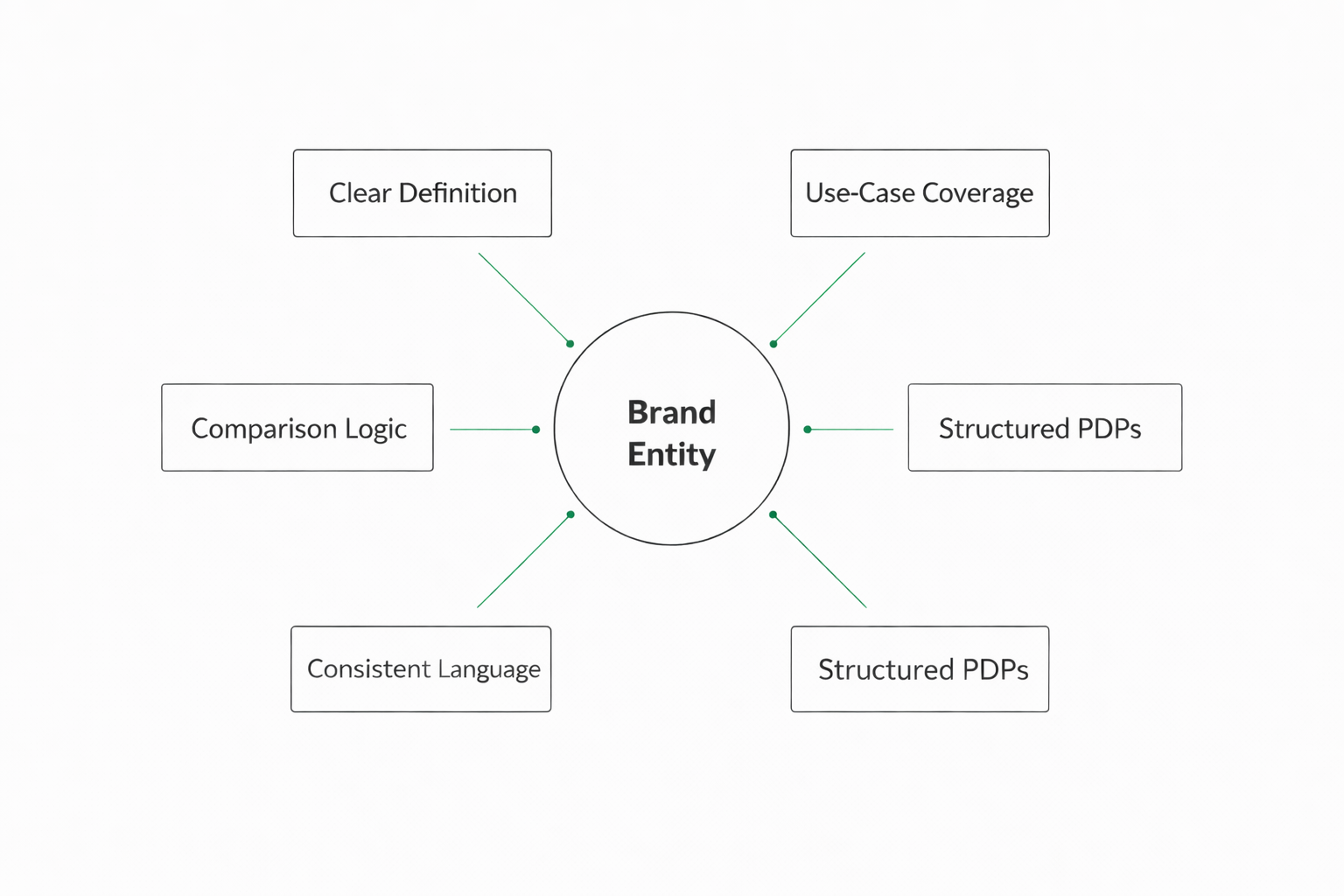
5. Maintain Language Consistency
Consistency across homepage, landing pages, and PDPs creates semantic stability.
Inconsistent terminology weakens interpretation.
AI favors coherence.
6. Measure AI Referral Signals
Visibility must be measured.
Tracking AI referrals through GA4 and Shopify helps validate:
• Emerging traffic patterns
• Referral sources
• Assisted conversions
Structure without measurement is speculation.
Closing
AIDO isn’t about chasing algorithms.
It’s about building clarity into your brand architecture.
Search engines index pages.
AI systems interpret entities.
Brands structured for interpretation will earn the next wave of discovery.
— Brett Sirianni
Marlin Media



Master the fundamentals of Generative AI in just one day. Learn how to simplify and harness...

When someone asks AI for a product recommendation, something interesting happens.
Just one more step to make your perfect choice. Click either button below to get started.


